Getting your clothes made in Europe: finding a factory and what to send
Making clothes in Europe means shorter shipping, factories you can visit and less customs paperwork. It also means higher labour costs and minimums that surprise a new label. Here is how to find a factory, what to send it, and what to ask before you pay a deposit.

First, decide what the factory does
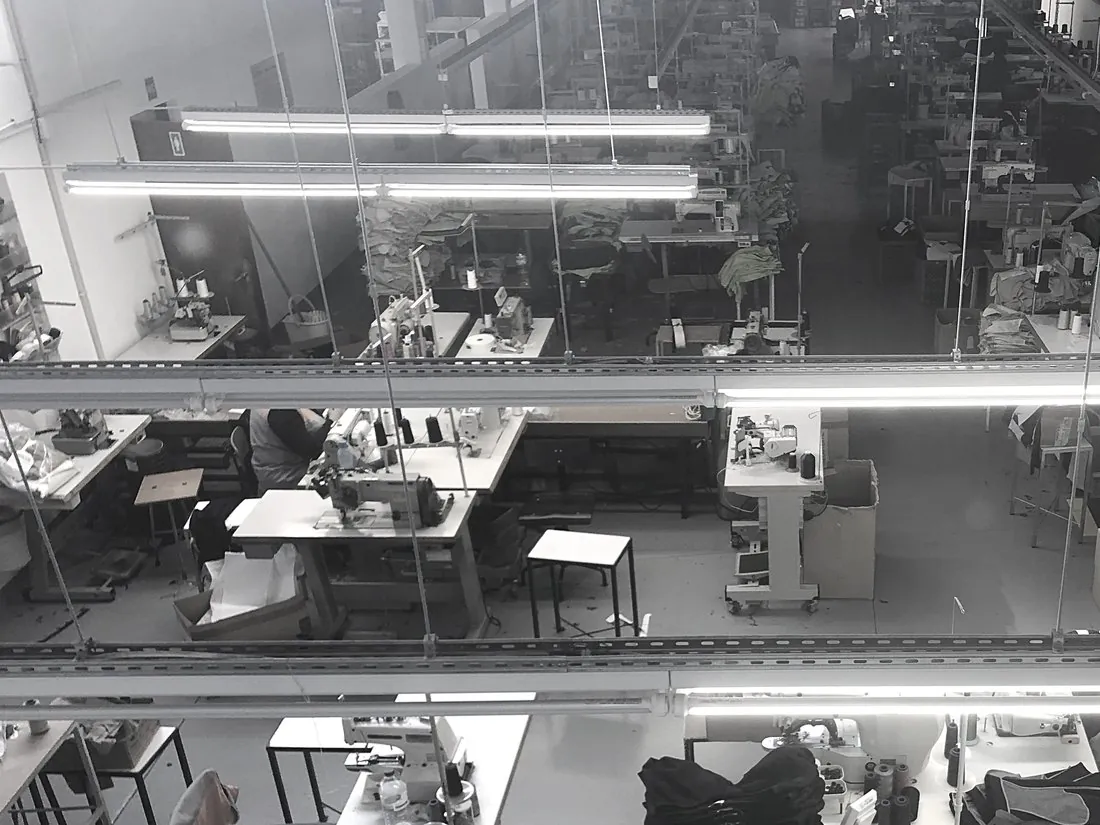
- CMT (cut, make, trim): you supply the fabric and trims. The factory cuts, sews, finishes and packs (QualityInspection.org).
- Full package, often called FOB: the factory also sources the fabric and trims for you (QualityInspection.org).
CMT gives you control over materials and suits you once you have fabric and trim suppliers you trust. The price of that control is your own risk: material losses, yield and coordinating several suppliers (QualityInspection.org). Full package is less to manage. Ask for the costing split into fabric, trims and labour, so you can see what you are paying for.
For samples and a first small run, a tailor or workroom near you can be the better start: you can stand next to the person sewing.
Where in Europe
The textile and clothing industry in the EU has nearly 200,000 companies and 1.2 million jobs, with €166 billion in yearly turnover (EURATEX, 2026). Inside the EU there is no customs border, so a factory in Portugal, Italy or Poland ships to Austria like a domestic supplier.
- Portugal: 118,000 people work in textiles and clothing, with €8.2 billion in turnover and €5.5 billion in exports to more than 170 markets in 2025. The industry association ATP has over 550 member companies and sits in Vila Nova de Famalicão, in the north (ATP).
- Türkiye: outside the EU, but in a customs union with it. Industrial goods made in Türkiye move into the EU without customs duty, and the proof is an A.TR movement certificate (European Commission). Ask for one with every shipment. It is still a border, so plan for customs clearance, usually through your forwarder.
- Italy, Poland, Romania, Bulgaria, Lithuania and the rest of the EU: no customs, same rules as Portugal. Choose by what the factory makes, not by the country.
| Made in | Customs duty into Austria | Paperwork |
|---|---|---|
| Austria or another EU country | None | A normal invoice |
| Türkiye | None on industrial goods made there | A.TR certificate and customs clearance |
| Outside the EU and Türkiye | Depends on the product and the country | A full import. Check Access2Markets |
How to find a factory
- Trade fairs. The next big ones, with dates from the official sites: Munich Fabric Start, 20 to 22 January 2027; Texworld Apparel Sourcing Paris, 25 to 27 January 2027, with about 1,100 manufacturers from around 35 countries; and Première Vision Paris, 26 to 28 January 2027. Fabric fairs are also where you meet the people who know which factories are good.
- Industry associations. National associations such as ATP in Portugal know their members and what each one makes.
- Other labels and your fabric suppliers. Ask who they use, and who they stopped using.
- Visit before your first bulk order. A day in the factory tells you more than a month of emails.
What to send
A complete tech pack: drawings, bill of materials, measurements in every size with tolerances, construction and labels. Add a reference garment if you have one, your size range, the quantity per colour and size, your target price and your delivery date. The more complete the file, the more comparable the quotes.
Samples, minimums and timing
- Samples: expect at least one fit sample before a pre-production sample. Ask what each sample costs and whether the fee is credited against the bulk order.
- Minimums: most factories set a minimum per style, and often per colour. Fabric mills have their own minimums, which can be higher than the factory's. Deadstock fabric, left over from other productions, lets you buy less.
- Timing: ask for a written timeline from approved sample to delivery, and plan for one more sample round than you hope for.
- Payment: a deposit with the order and the balance before shipping is common. Do not pay everything up front to a factory you have not visited or checked.
Quality
Approve one pre-production sample, keep it, and make it the reference for the whole run. Measure finished pieces against your points-of-measure chart before you pay the balance, or have an inspector do it.
Labels, certificates and green claims
Fibre content on the label is a legal duty in the EU. Our fashion label checklist covers labels, care symbols and the rest.
- OEKO-TEX STANDARD 100 is a label for textiles tested for harmful substances: every thread, button and accessory is tested against a list of over 1,000 substances (OEKO-TEX).
- GOTS certifies organic textiles through every processing stage. "Organic" means at least 95% certified organic fibres, "made with organic materials" at least 70%, and the standard adds environmental and social criteria (GOTS).
Be careful with your own words. Since 27 September 2026, EU consumer law bans generic environmental claims such as "eco-friendly" or "green" without recognised excellent environmental performance, and sustainability labels that are not based on a certification scheme or set up by public authorities (Directive (EU) 2024/825). "Made from 100% GOTS-certified organic cotton" is specific. "Sustainable fashion" is not.
This is general information, not legal advice.
Ask before you commit
- What do you make most of, and for brands of my size?
- What is your minimum per style and per colour?
- What does a sample cost, and how long does it take?
- Do you sew in house, or pass work to other workshops?
- Who checks quality, and when?
- What are the payment terms, and what happens if the run fails inspection?
Red flags
- A price before they have seen your tech pack.
- No samples, or samples that miss the spec with no explanation.
- Full payment up front.
- No visit allowed, or no clear answer on who actually sews.
- Certificates you cannot check with the certifier.
Before and after the factory
On FSHNiSTA you find tailors near you on the map, useful for samples and small first runs. When the collection is ready, designers open a Shop where every piece carries Try on.