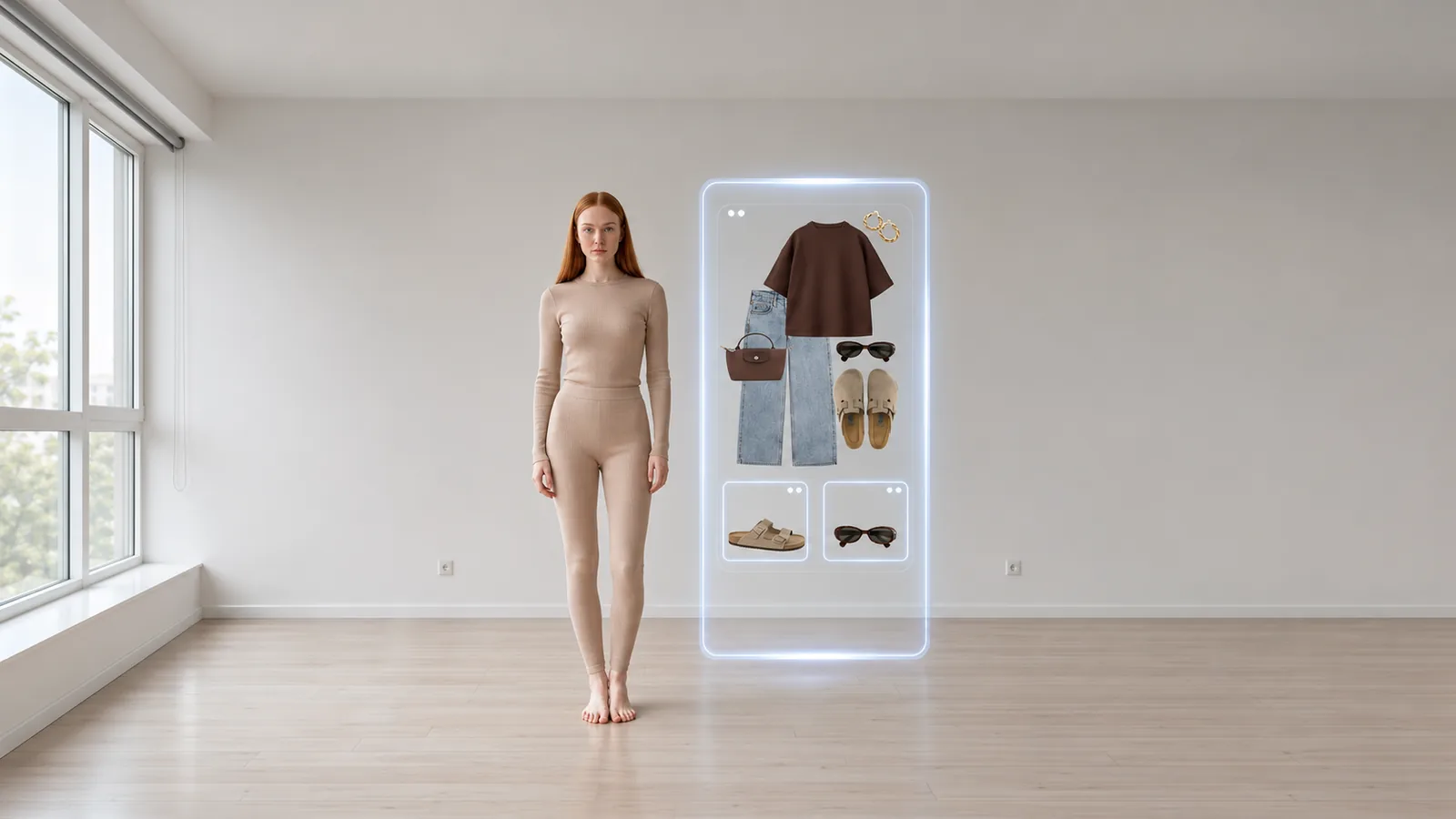
So how does virtual try-on work? There is no magic mirror. There are three steps: understanding your body, understanding the garment, and putting the two together in a believable picture. Here is each one in plain words.
Virtual try-on: how it works in three steps
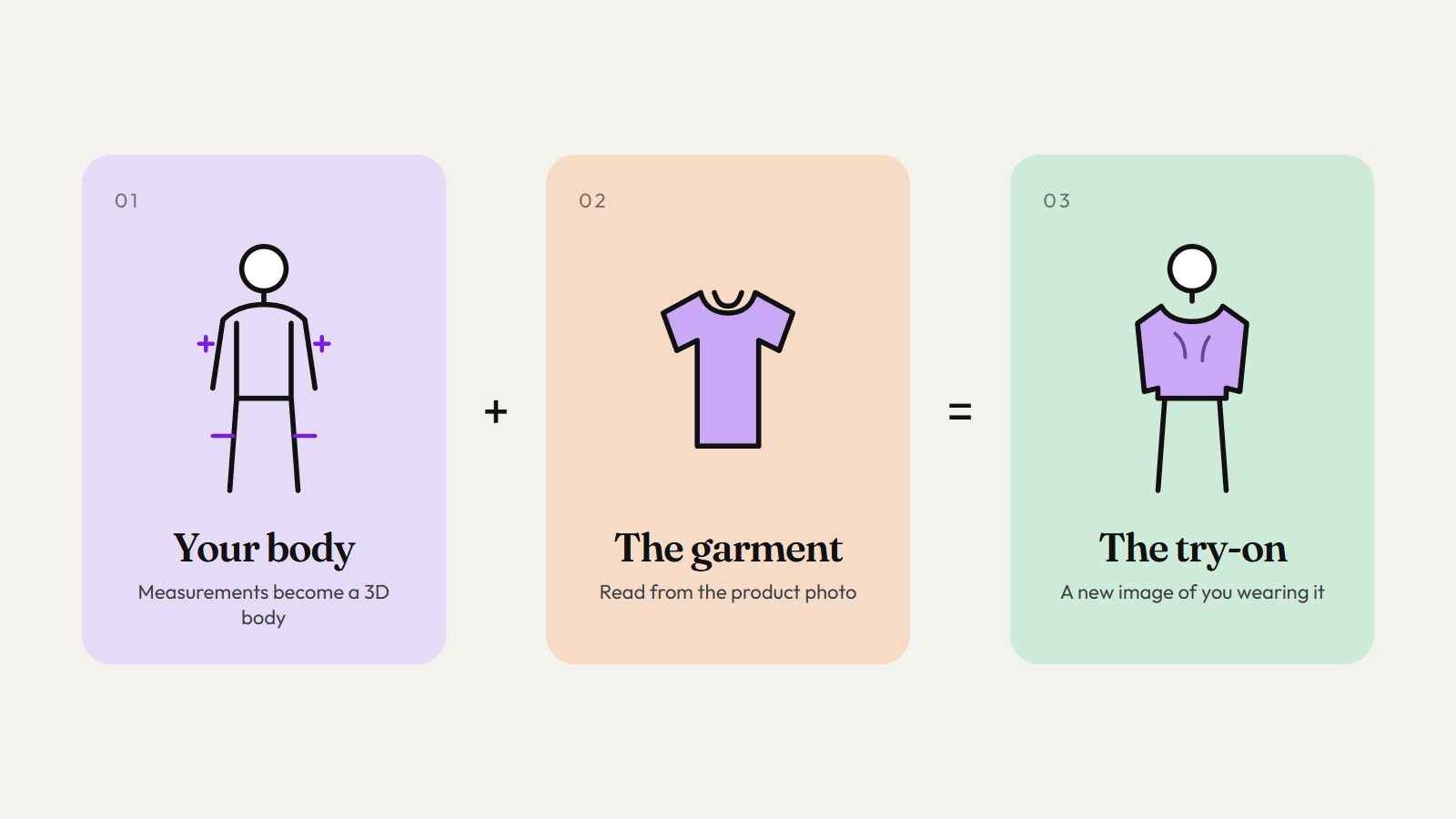
Step 1: Understanding your body
Everything starts with you. A good try-on needs to know your shape, not just your face.
There are two common ways to get there. Some apps estimate your body from a photo. Others ask for your measurements. Some combine both.
Those details are turned into a 3D body model: a digital shape with your proportions. Researchers have worked on this for years. SMPL, one of the best known body models, was published in 2015 by researchers at the Max Planck Institute for Intelligent Systems. It was learned from thousands of 3D body scans and can represent a wide variety of body shapes. On FSHNiSTA, your measurements build this kind of 3D body with an open 3D body model, so the figure is anchored to numbers rather than guesswork.
Step 2: Understanding the garment
Next, the system needs to understand the piece of clothing: its outline, its category, where the neckline and hem sit, and how the fabric is likely to fall. For most shops, the starting point is simply the product photo.
That is why product photos matter more than most sellers think. A garment shot flat, cropped at the hem or half hidden by a bag gives the model less to work with. The clearest results come from the whole garment, in good light, on a plain background.
Step 3: Putting the two together
This is the part that has changed most in recent years. Modern try-on uses image-generation models trained to draw a person wearing a specific garment.
Google described one approach when it introduced virtual try-on for women's tops in June 2023. Instead of a text prompt, the model receives two images, one of the person and one of the garment, and generates a realistic image of that person wearing it, including how fabric drapes, folds and stretches. It learned this from pairs of photos showing the same person in a garment in two different poses.
The result is not a sticker pasted on a photo. The model redraws the garment to follow the body underneath it.
Why you do not need special hardware
Two things made phone-based try-on possible:
- The heavy work happens on servers. Your phone sends the inputs and receives the result. The demanding computation runs elsewhere, so an ordinary phone is enough.
- You do not need a scan of your own. Once a body model has been learned from many scans, describing a new person takes a set of numbers, such as your measurements, rather than a new scan.
The trade-off is time. A model has to draw a new picture rather than look one up, so a result is not instant.
How virtual try-on works on FSHNiSTA today
FSHNiSTA is in testing with a small group of testers, so here is exactly what runs today:
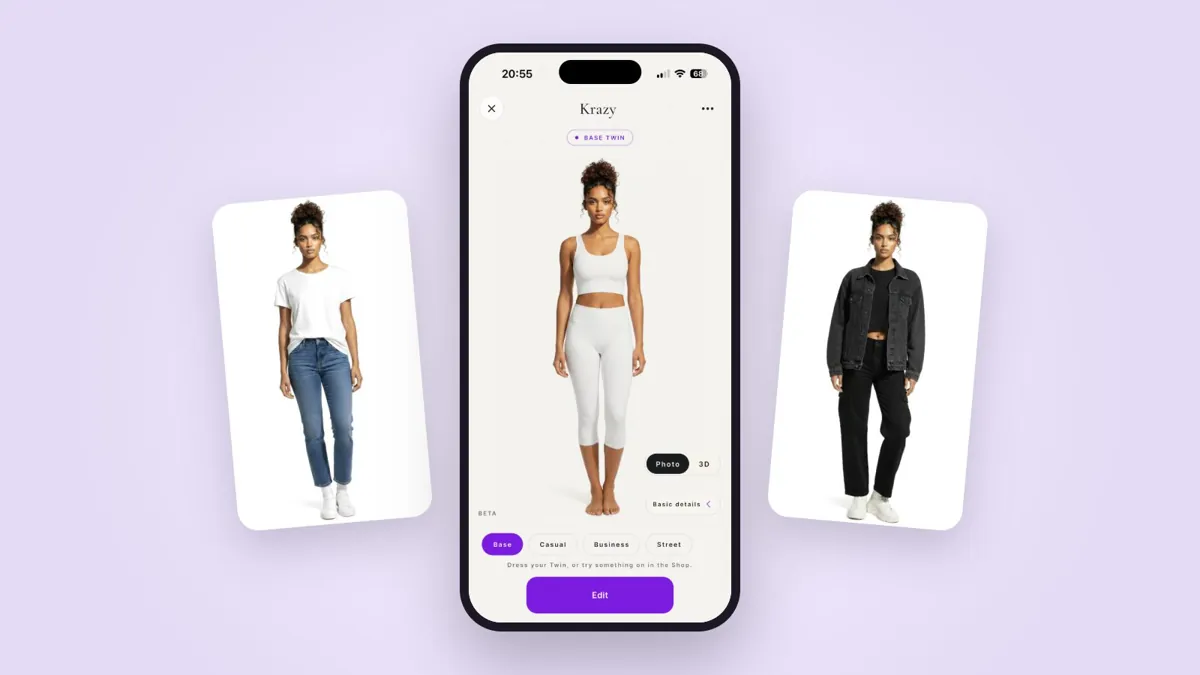
- You create your Digital Twin from your details. It appears as a base twin in neutral basics. Read what a fashion digital twin is for the bigger picture, and our FAQ for the common questions.
- Your measurements build a 3D body in the background, so the twin follows your proportions.
- You tap Try on on a product in the shop. The garment is sent to a dedicated virtual try-on model, which renders it onto your twin.
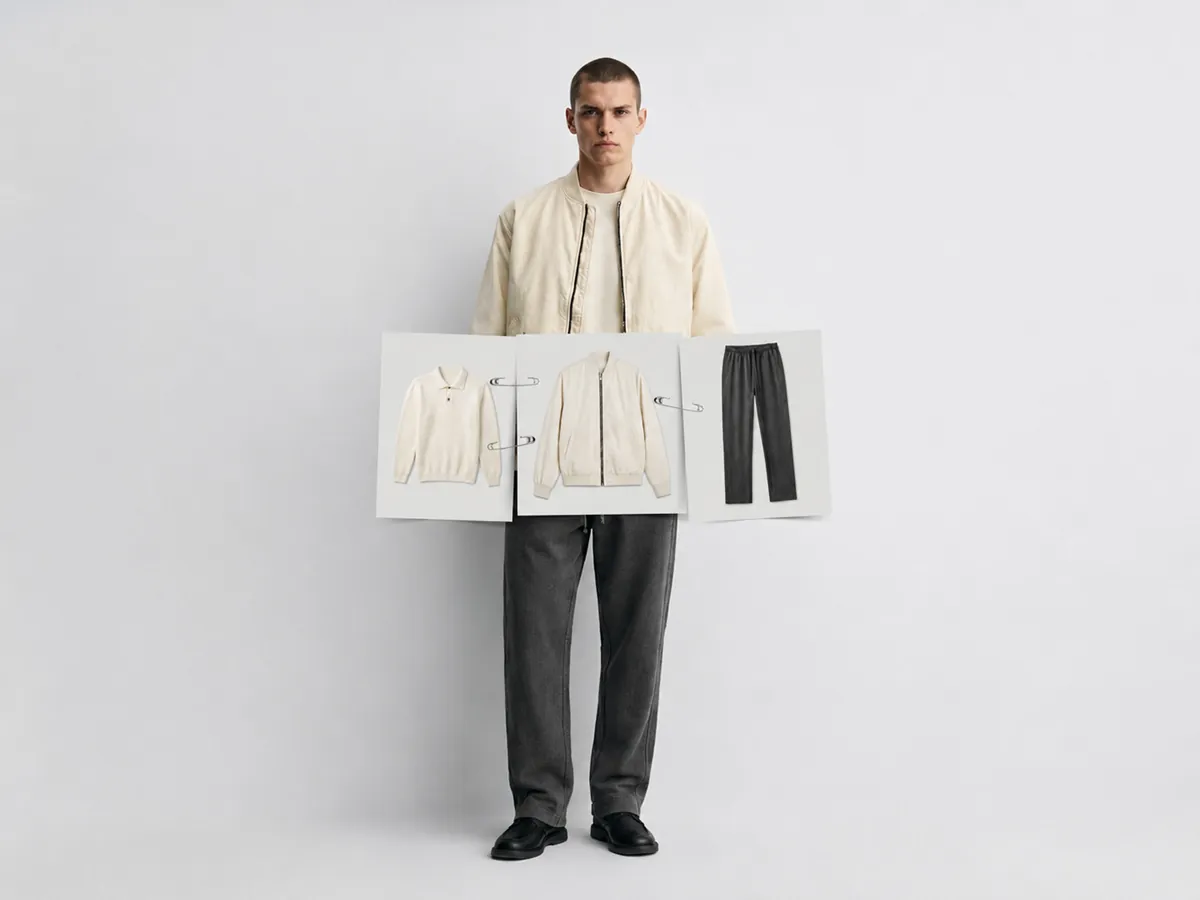
- You compare. Because every piece goes onto the same twin, you can compare looks fairly.
What we are still working on, honestly:
- More body types. Body calibration started with female bodies, and we are adding more.
- Our own rendering engine. Today we use a dedicated third-party try-on model. Our own engine is in development.
Getting a better result
A try-on is only as good as what goes into it. A few habits make a real difference:
- Measure honestly. Over light clothing or none, with the tape level and snug rather than tight. Ask someone to help with the back and the inside leg.
- Update when you change. Measurements from two years ago describe someone else.
- Read the size chart anyway. A try-on shows shape and proportion. The seller's chart still decides which size arrives.
- Compare, do not judge one image. Try two or three pieces on the same twin. The differences tell you more than any single picture.
What virtual try-on can and cannot tell you
Virtual try-on is very good at answering "does this suit me?" and "does this work with my shape?". It is getting better at "will this fit?", which depends on accurate measurements and accurate garment sizes from the seller.
It cannot tell you how a fabric feels, how warm a coat is, or whether a seam will scratch. It is a tool to remove guesswork, not a replacement for your own judgement. Used that way, it changes the question you ask before you pay, from "will this work?" to "which of these works best?".
On FSHNiSTA, every piece you try lands on the same Digital Twin, so the picture you compare is always you. Apply to become a FSHNiSTA tester to try it yourself.
Lead image: FSHNiSTA app