How to measure yourself for clothes that fit
A size label is a guess about your body. Your measurements are the answer. Take them once, write them down, and every size chart you meet after that becomes a lookup instead of a gamble.
What you need
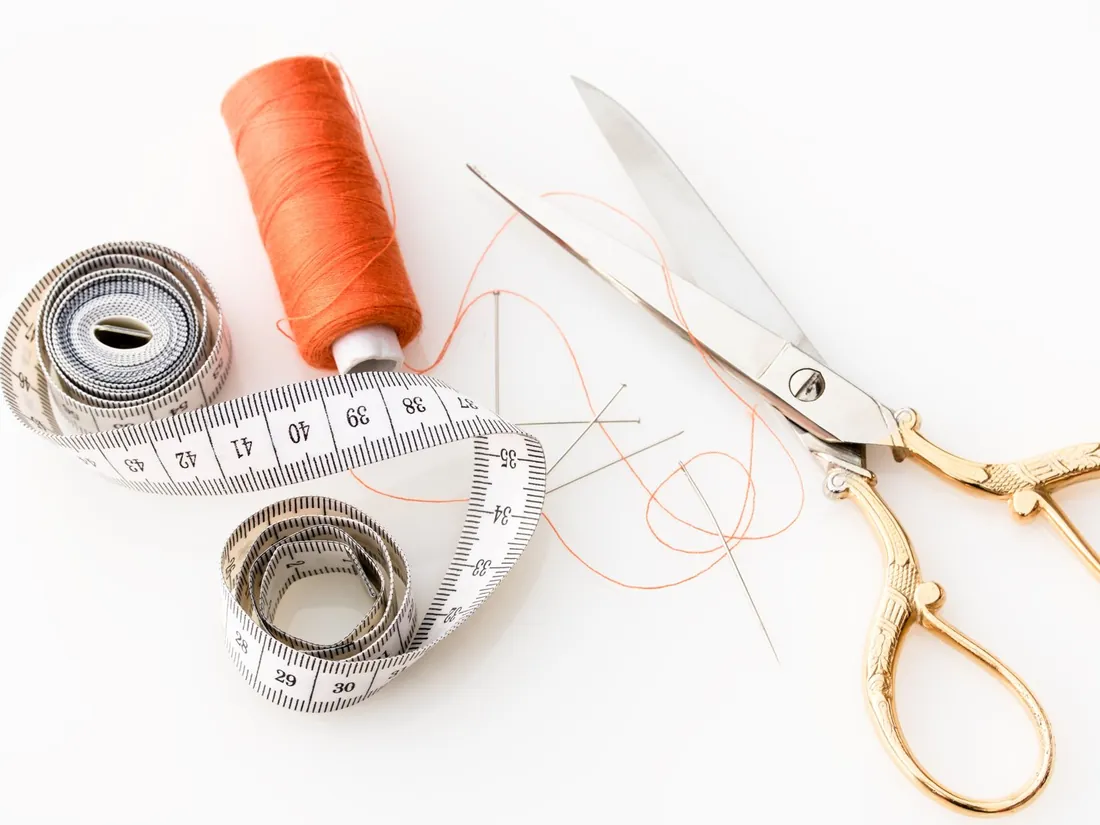
- A soft fabric tape. It follows the curve of the body. A rigid DIY tape does not. (Simply Sewing)
- Thin clothes or underwear. Measure over what you will wear under the garment. For anything fitted at the chest, wear the bra you will wear with it, and never a padded one when you measure for a bra. (Simply Sewing, C&A)
- A mirror or a second person. A mirror lets you check the tape is level. A helper is better, and for shoulders it is almost essential. (Nathan Tailors)
Three rules for every measurement
- Keep the tape level. Around the body it runs parallel to the floor, front and back. Check it in the mirror.
- Snug, not tight. The tape lies flat on you without pressing in. You should be able to breathe normally.
- Stand as you normally stand. Feet together, arms down, shoulders relaxed. Do not breathe in, puff out or flex. (The Art of Manliness, Nathan Tailors)
Write each number down straight away, in centimetres. If one looks odd, measure it again.
The measurements
1. How to measure your bust or chest
Where: around the fullest part, across the nipples, with the tape under your arms.
How: arms down, tape level all the way round the back.
Common mistake: the tape dips at the back, which makes the number too small. (Simply Sewing, The Art of Manliness)
2. How to measure your underbust
Where: directly under the bust, around the ribcage.
How: firmer than the other measurements, but you should still breathe normally.
What it is for: the band size of a bra. The difference between bust and underbust gives the cup. In the European system, 12 cm of difference is roughly an A cup and each further 2 cm is one cup up: 92 cm bust and 76 cm underbust make a 75C.
Common mistake: measuring over a padded bra. (C&A)
Brands still differ, so always try a bra on before you keep it. (ÖKO-TEST)
3. How to measure your waist
There are two waists, and size charts do not always say which one they mean.
- Natural waist: hold your waist and bend to the side. The crease that forms is the narrowest part of your torso. Dresses, skirts and tailored jackets use this one. (Holland Cooper, Simply Sewing)
- Trouser waist: where your trousers actually sit, often around the navel or lower. (The Art of Manliness)
Common mistake: pulling the stomach in. Measure relaxed, as you will be when you wear the clothes.
4. How to measure your hips
Where: around the fullest part of your hips and bottom.
How: feet together. Move the tape up and down a little and keep the largest number.
Common mistake: measuring at the hip bones, which is usually higher and smaller than the fullest point. (Holland Cooper, Simply Sewing)
5. How to measure your inseam
Where: from the crotch down the inside of the leg.
How: shoes off, stand straight. Stop at the ankle bone for a standard length, or at the floor if the brand asks for full length. Brands do both, so check which one the chart uses.
Easier way: lay a pair of trousers whose length you like flat and measure the inside seam from crotch to hem. (Holland Cooper, Simply Sewing)
6. How to measure your outseam
Where: from your waist down the outside of the leg to the floor. (Simply Sewing)
7. How to measure shoulder width
Where: across the back, from the outer edge of one shoulder bone to the other. That bony point is where a jacket's shoulder seam should sit.
How: this one needs a helper. Arms hang loose, shoulders neither pulled back nor rolled forward.
Why it matters: shoulders are the hardest part of a jacket to alter, so this is the number to get right before you buy. (Nathan Tailors)
8. How to measure sleeve length
Where: from the shoulder point to the wrist bone.
How: arm relaxed at your side. (The Art of Manliness, Simply Sewing)
9. How to measure your neck
Where: around the lower part of the neck, where a shirt collar sits.
How: slip two fingers between the tape and your neck so the collar will be comfortable.
What it is for: shirt collar sizes. (The Art of Manliness)
10. How to measure your thigh
Where: around the widest part of the upper leg, a few centimetres below where the leg meets the bottom.
How: feet hip-width apart, weight on both legs, leg relaxed.
Common mistake: measuring too low, or tensing the muscle.
Why it matters: trousers that fit the waist but not the thigh pull and strain at the top of the leg. (Nathan Tailors)
Using the numbers
Every brand has its own chart. There is no single worldwide clothing size, so a 38 in one brand is not a 38 in another. Compare your numbers with the chart of the brand you are buying from. (ÖKO-TEST)
Sizes start from the body. The European standard EN 13402 builds sizing on body measurements, not garment measurements, and labels clothes with a pictogram of the key body dimensions. Garment measurements, including the room a designer adds for ease, are left to the brand. (DIN Media, EN 13402-3:2017, BSI, EN 13402-3)
Check against a garment that fits. Lay something you love flat and measure it the same way. If a brand gives garment measurements too, compare them with that piece.
Between two sizes? Decide by the measurement that matters most for that piece: chest or shoulders for jackets and shirts, hips for trousers and skirts, and buy the size that fits that one. Smaller differences elsewhere are easier to alter.
Stretch changes things. Jersey, knitwear and stretch denim give. Woven cotton, linen and wool do not. If you are between sizes in a fabric with no stretch, go up.
Measure again from time to time. Bodies change. Once a year, or before a big purchase, is enough.
Your measurements
Print this, fill it in, keep it on your phone.
| Measurement | cm | Date |
|---|---|---|
| Bust or chest | ||
| Underbust | ||
| Natural waist | ||
| Trouser waist | ||
| Hips | ||
| Inseam | ||
| Outseam | ||
| Shoulder width | ||
| Sleeve | ||
| Neck | ||
| Thigh | ||
| Height |
Your numbers on FSHNiSTA
On FSHNiSTA, these are the numbers your Twin is built from: a 3D body made from your own measurements, so pieces in the Shop can be tried on your Twin before you buy. Body calibration starts with women's bodies, and more body types are being added.